
Audit Overview
Your store's untapped revenue potential — and how to unlock it
Why We Created This Audit
We analyzed arthurcourt.com the same way we've audited 350+ e-commerce stores — looking for the specific gaps between your current experience and what top-performing Home & Living stores deliver. Every finding in this report is a revenue opportunity backed by industry data and competitive benchmarks.
What We Analyzed
- UX & Conversion Design14 findings
- Performance & Speedvs 3 competitors
- Technology & App StackPlatform + 8 apps
- Industry BenchmarksHome & Living
Pages Analyzed
- Homepage2 findings
- Collection Pages1 findings
- Product Pages (PDP)9 findings
- Cart & Checkout2 findings
 This audit was prepared by Growisto — a CRO-led Website development team behind 167% conversion growth for Atomberg, 46% CR lift for TyresNmore, and 350+ e-commerce projects.
UX & Conversion Findings
Page-by-page analysis with visual comparisons against top Home & Living stores
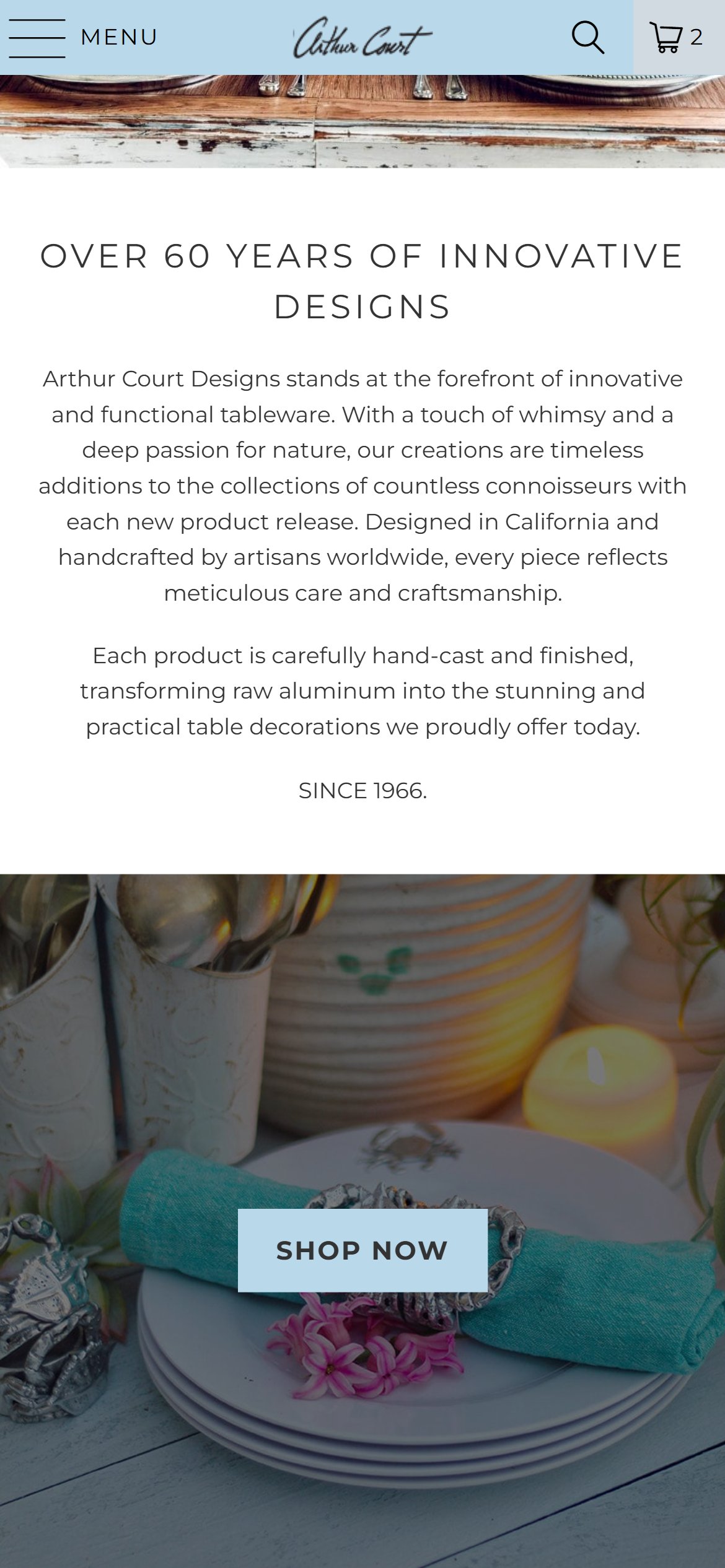
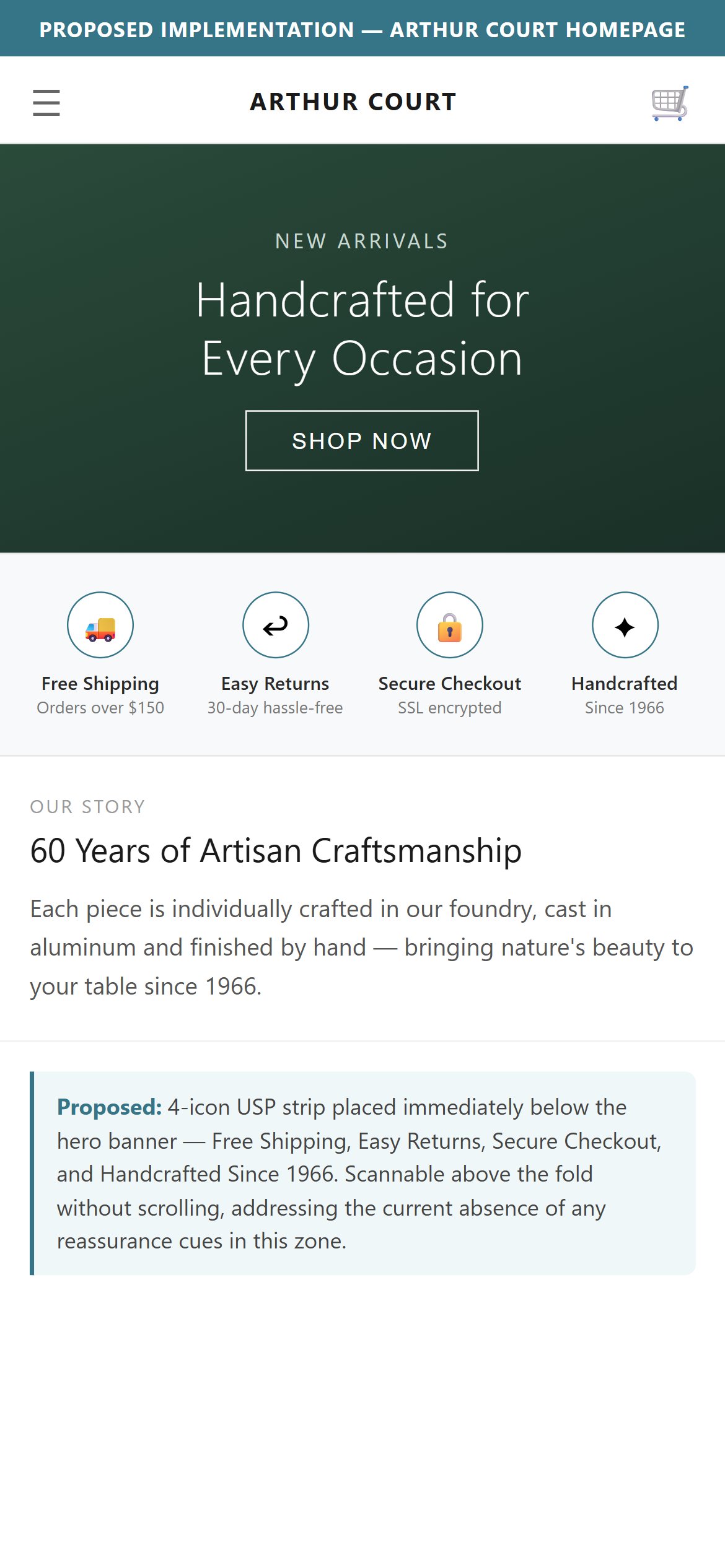
- The homepage region directly below the hero goes straight from a brand-narrative paragraph into the next lifestyle banner — there is no trust/USP icon strip (free shipping, easy returns, handcrafted guarantee, secure checkout).
- The only on-page reassurance cues are prose mentions of 'handcrafted' and 'since 1966' buried in the narrative copy, not a scannable benefit row.
- A USP/trust strip is a standard above-the-fold reassurance pattern that helps first-time visitors qualify a premium, considered-purchase décor brand quickly.
- No USP/trust/guarantee badge-row elements exist in the homepage DOM (only product 'NEW' stickers).
- Add a 3–4 item USP/trust strip just below the hero (e.g. 'Handcrafted since 1966', 'Easy returns', 'Secure checkout', shipping promise) using simple icons + short labels.
- Keep it persistent on mobile so the reassurance is visible without deep scrolling.
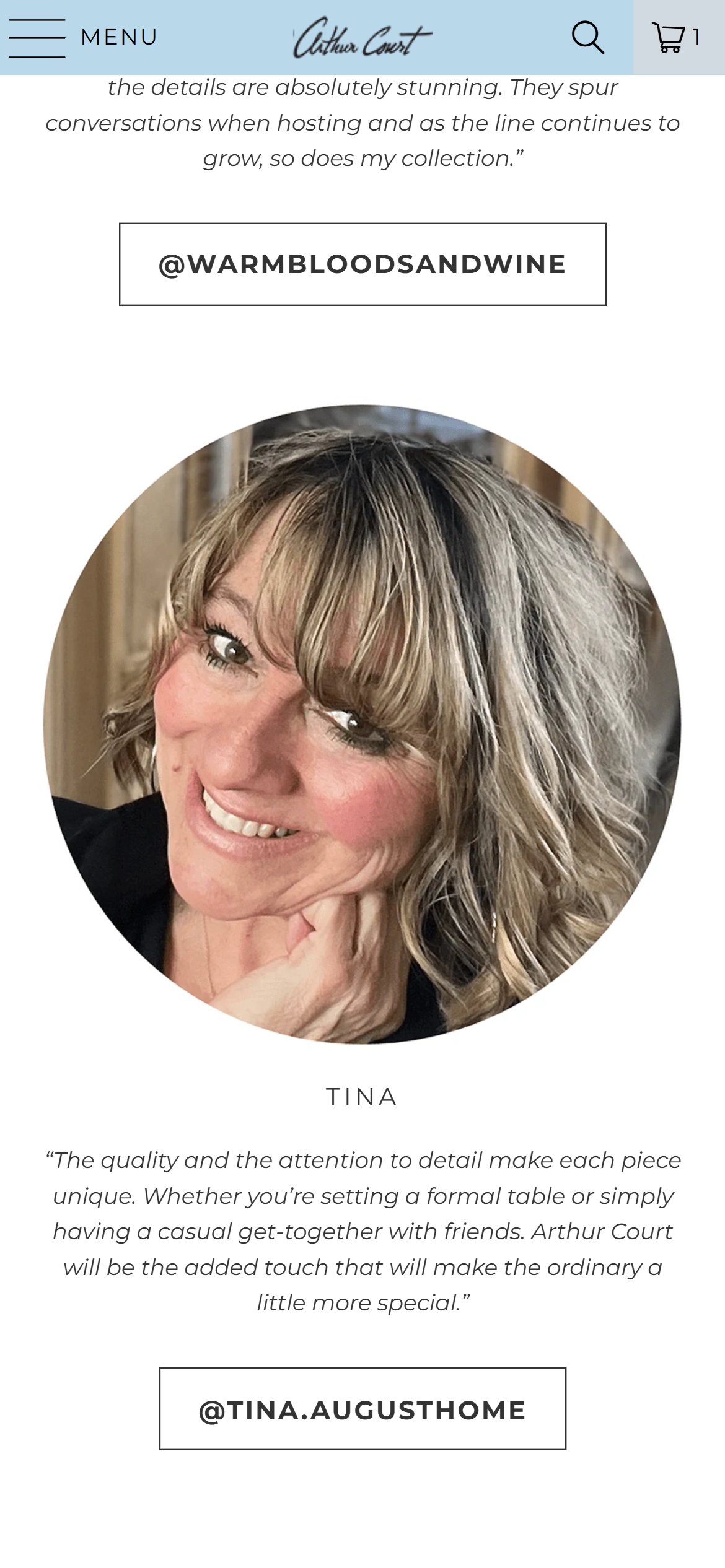
- The homepage does carry social proof — a three-person influencer/ambassador testimonial section (Emily, Taryn, Tina) with quotes and Instagram handles, plus an Instagram feed.
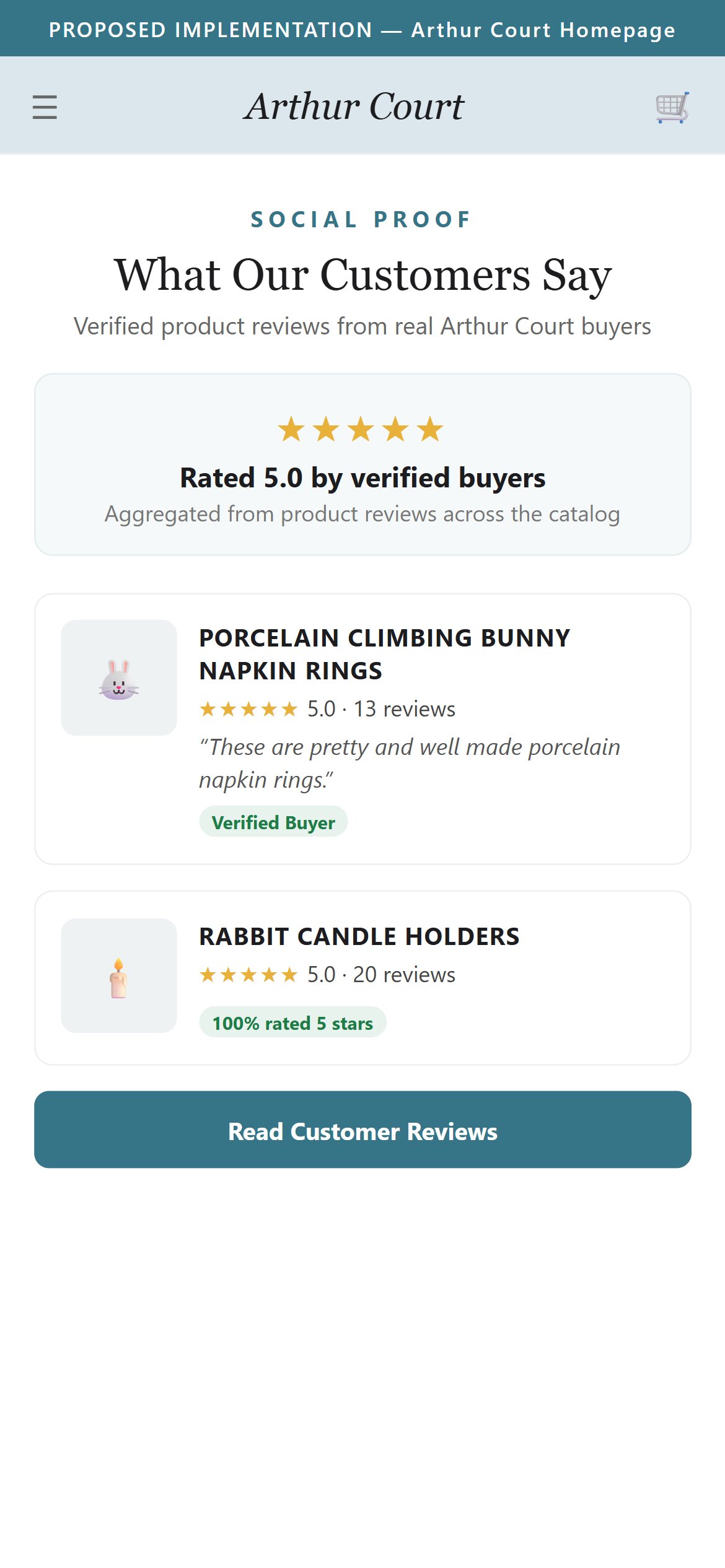
- What it does not surface is verified customer product-review social proof: Arthur Court runs Stamped and individual PDPs carry strong ratings (e.g. the Porcelain Climbing Bunny Napkin Rings show 5.0 from 13 reviews; Rabbit Candle Holders 5.0 from 20 reviews, with 100% five-star) — none of which appears anywhere on the homepage.
- Influencer quotes read as brand-curated, whereas aggregated customer reviews read as independent proof and tend to convert first-time visitors more effectively on a considered-purchase catalog.
- A customer-review highlight strip (aggregate rating + top verified reviews) would complement the existing influencer section rather than replace it.
- Add a 'What our customers say' homepage strip that surfaces the existing Stamped customer reviews — an aggregate star rating plus 2–3 verified-buyer review highlights that link to the product.
- Keep the influencer/IG testimonial section, but pair it with this customer-review proof so the homepage shows both ambassador and independent-buyer validation.
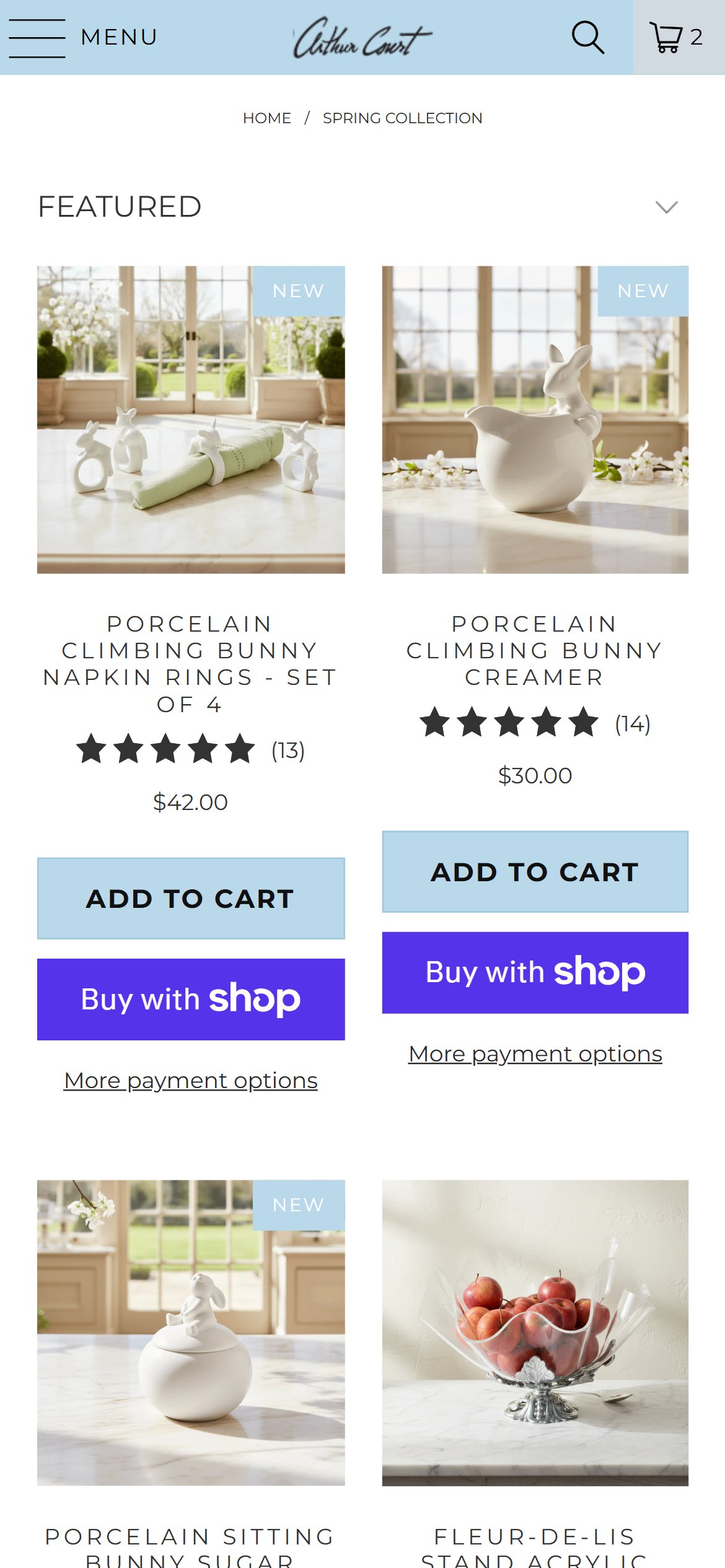
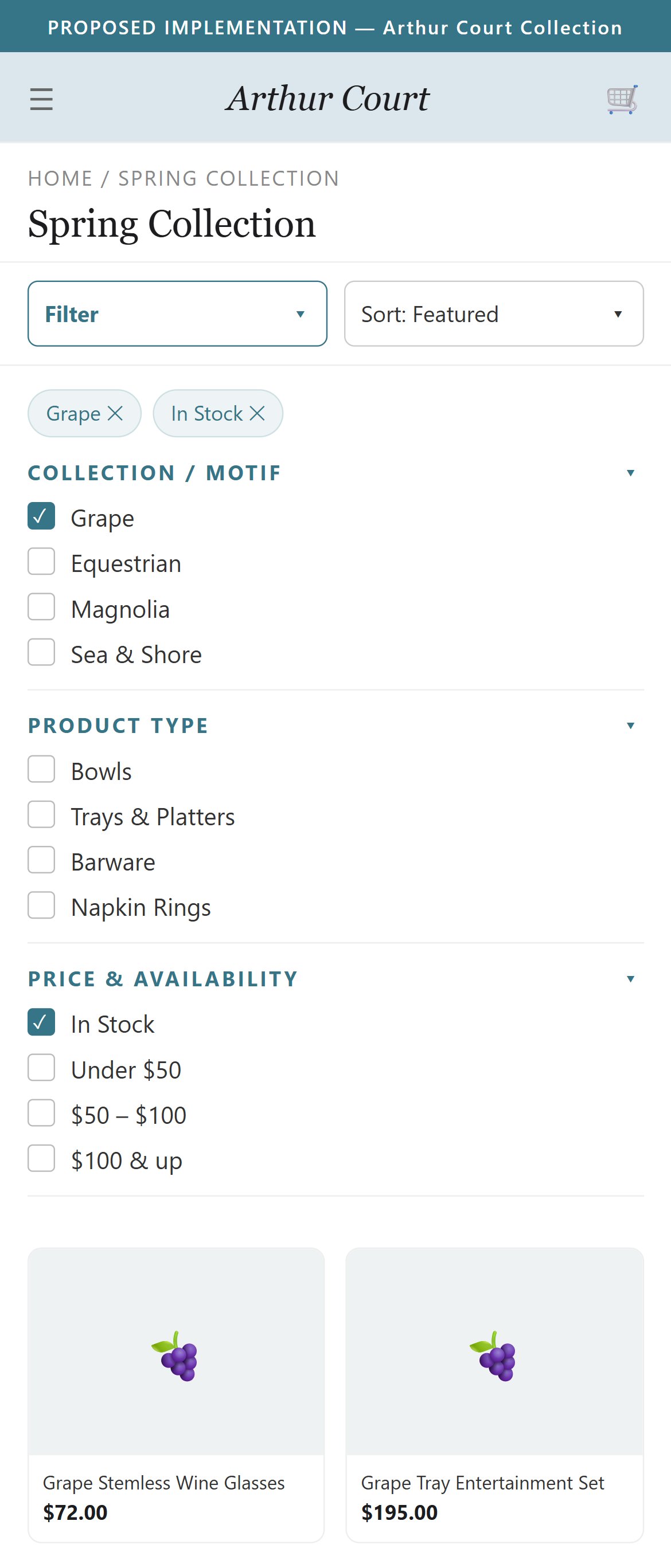
- Collection pages expose only a 'Featured' sort dropdown — there is no filter UI at all (no price range, no motif/collection, no product type, no availability).
- Spring and other collections paginate across many products, so without filters mobile shoppers must scroll the entire grid to find a price point, a motif (e.g. Grape vs Equestrian), or a product type (bowls vs barware).
- Faceted filtering is a baseline expectation on premium home & living storefronts and directly improves product discoverability and PDP view rate.
- Add a mobile filter bar with at least Price range, Product Type, and Collection/Motif facets (the store already runs Searchanise, which supports faceted filtering).
- Pair filters with the existing sort control in a persistent top bar so shoppers can refine without scrolling back to the top.
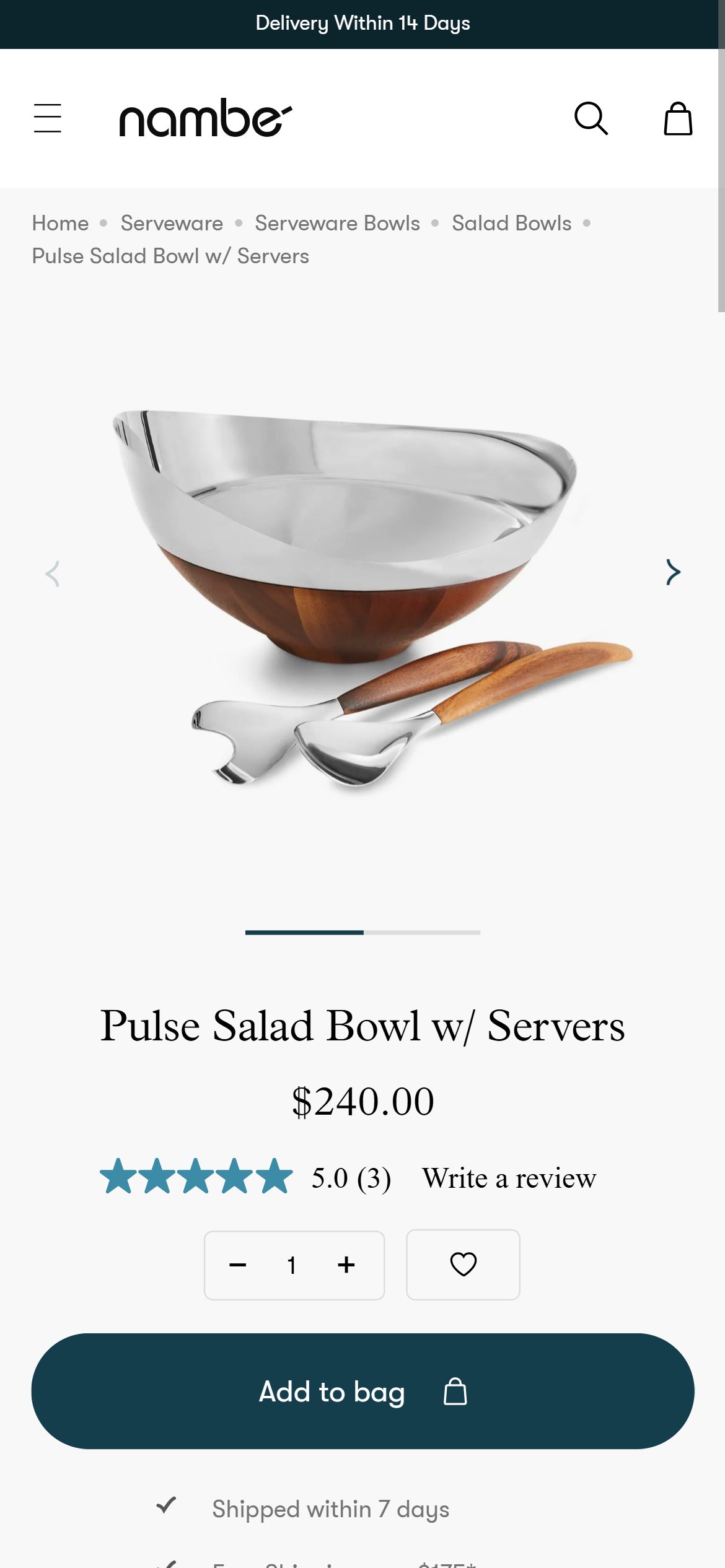
- The PDP does surface a Stamped star rating and review count, but it renders below the Add-to-Cart button rather than directly under the product title — so the first thing a shopper reads under the title is the price, not the social proof.
- On a $100–$250 considered-purchase serveware PDP, leading the above-title zone with a clickable rating is a stronger trust cue than having it appear only after the buy button.
- Premium peers place a clickable rating immediately under the title (linking down to the reviews section), keeping price and proof adjacent at the top of the buy decision.
- Relocate the Stamped star rating + review count to sit directly under the product title (above the price), keeping it clickable to jump to the reviews section.
- Retain the rating in the ATC zone if desired, but ensure the primary, above-title placement is present so social proof is the first cue under the title.
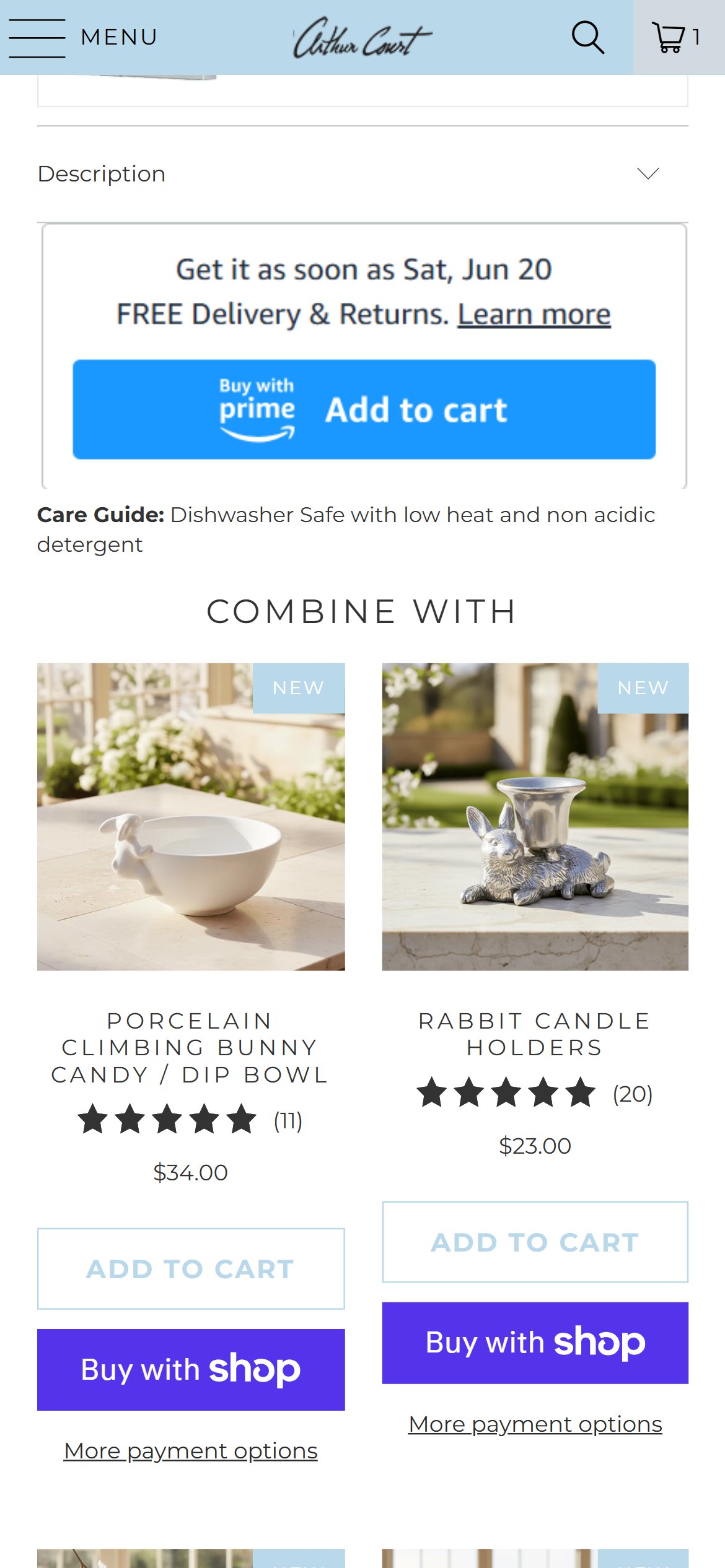
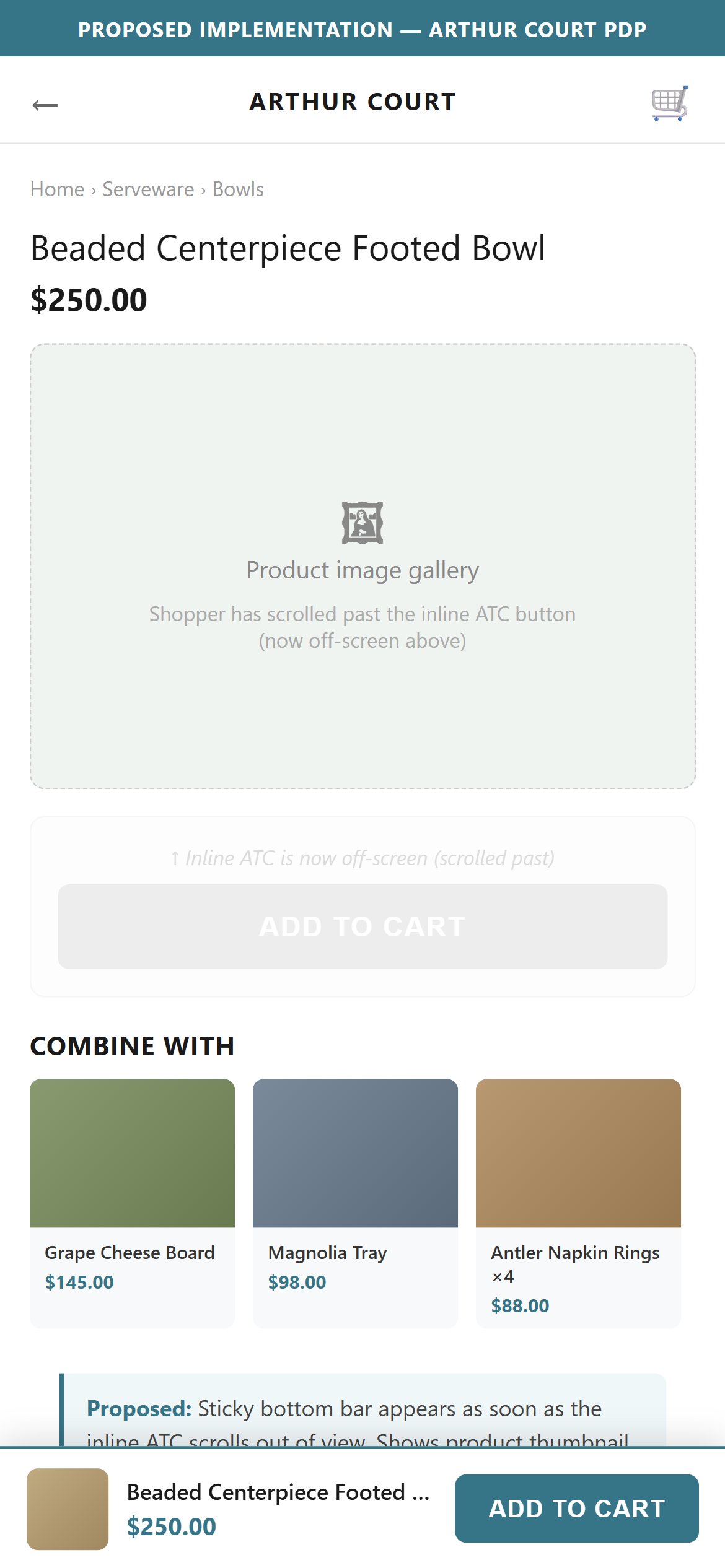
- Once the shopper scrolls past the inline Add to Cart, no sticky/fixed ATC bar appears at the bottom of the mobile viewport — the CTA is lost for the rest of a long page.
- Arthur Court PDPs are long: image gallery, bullet copy, gift-wrap upsell, a large 'Combine With' cross-sell of ~18 products, then reviews — the shopper must scroll all the way back up to buy.
- A persistent sticky ATC is a proven mobile conversion safeguard, particularly on premium price points where browsing the gallery and cross-sells is part of the decision.
- Add a sticky bottom ATC bar that appears after the inline button scrolls out of view, showing the product thumbnail, price, variant selector, and Add to Cart.
- Hide the sticky bar while the inline ATC is in view to avoid duplicate CTAs.
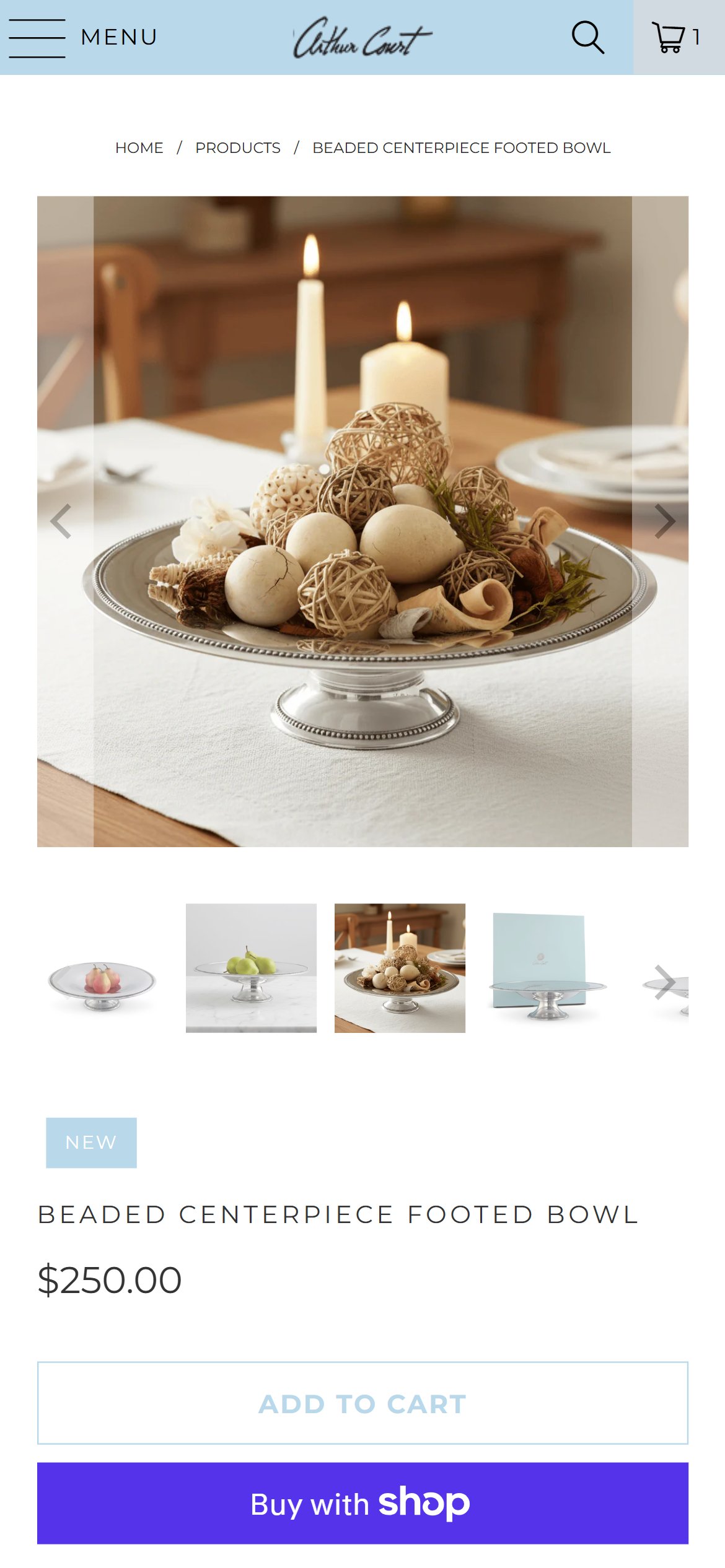
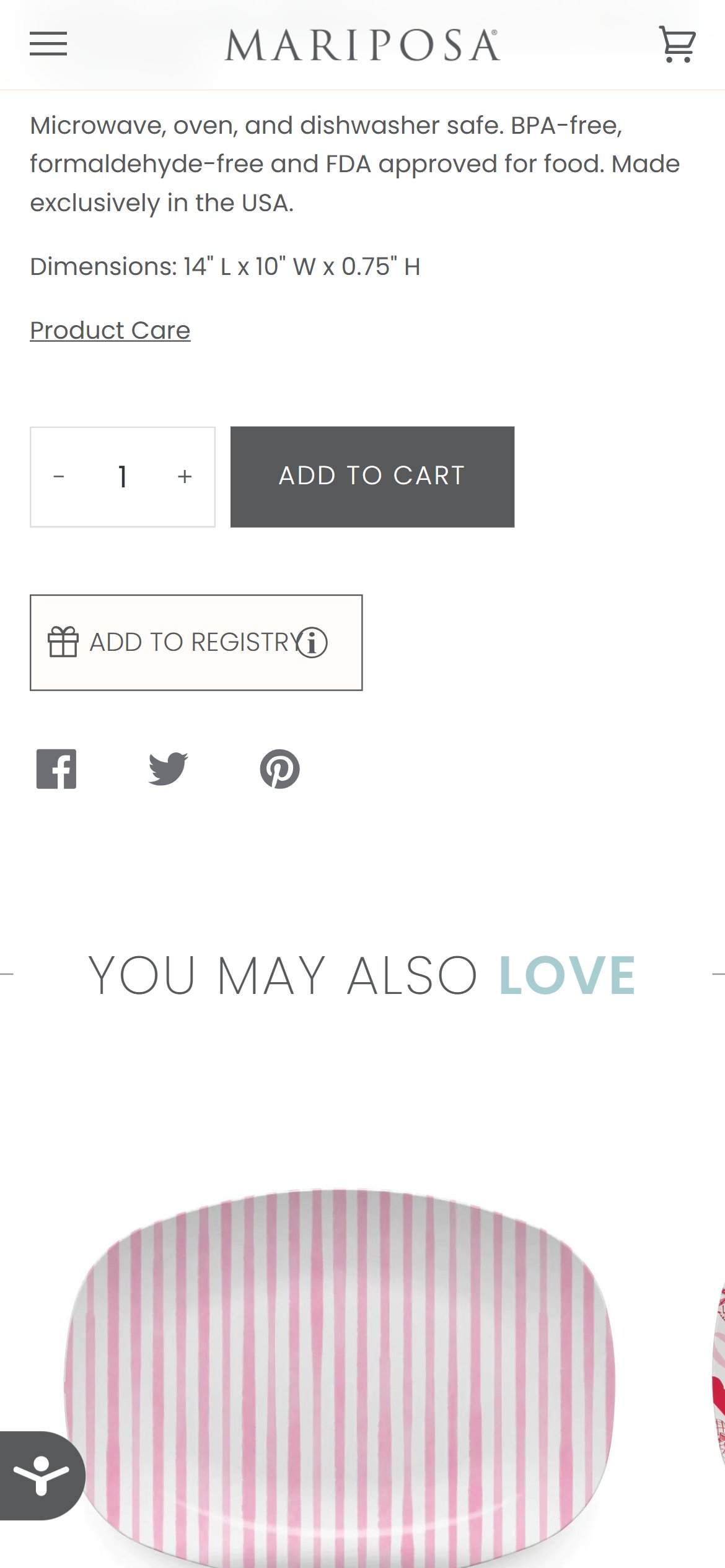
- The PDP offers only Add to Cart and Buy with Shop — there is no quantity selector, so each click adds exactly one unit.
- Tableware and entertaining pieces are frequently bought in multiples (place settings, coasters, glasses, napkin rings); shoppers must add one, then go to the cart to increase quantity.
- A +/- quantity control on the PDP is a baseline expectation and removes friction for multi-unit purchases that raise average order value.
- Add a +/- quantity stepper next to the Add to Cart button on the PDP.
- Default to 1 but make the stepper prominent on product types commonly bought in sets.
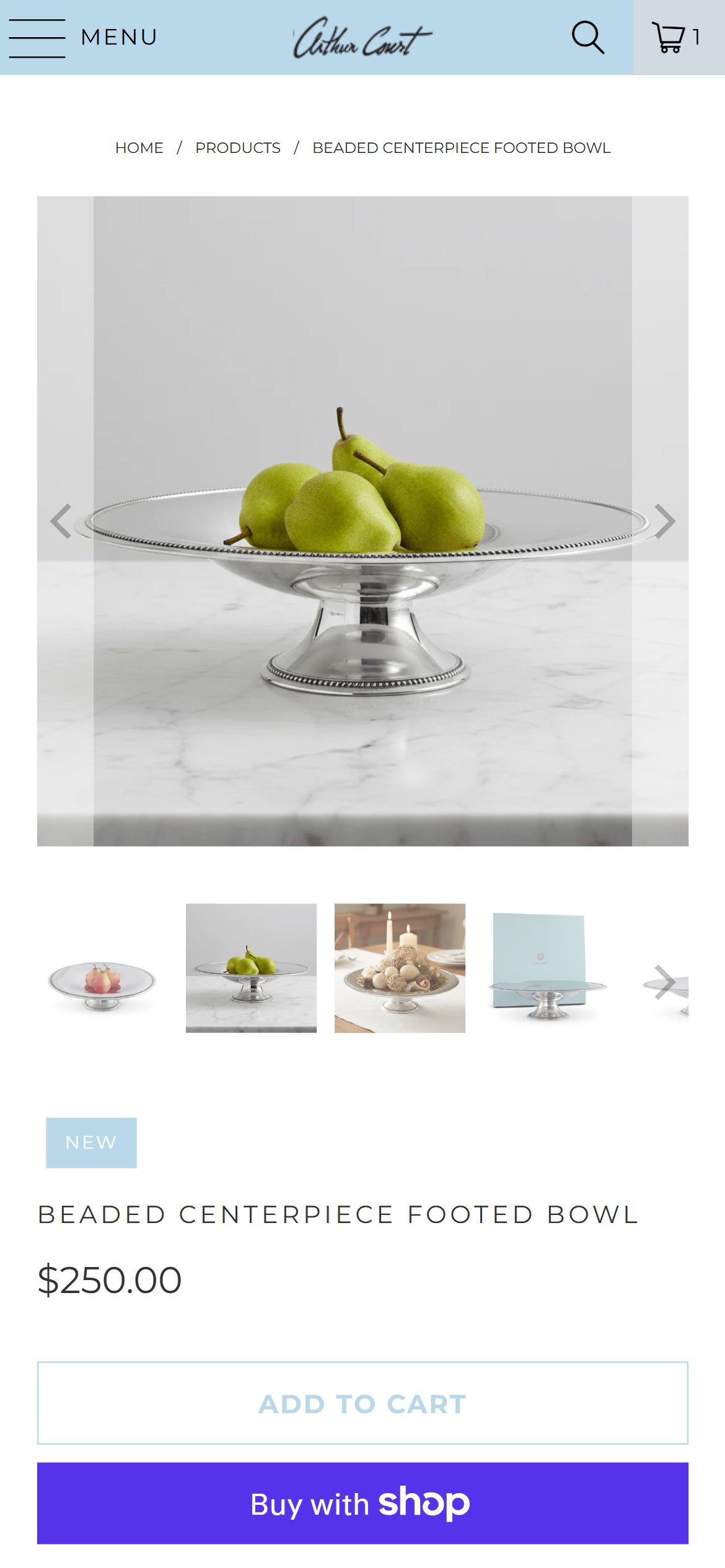
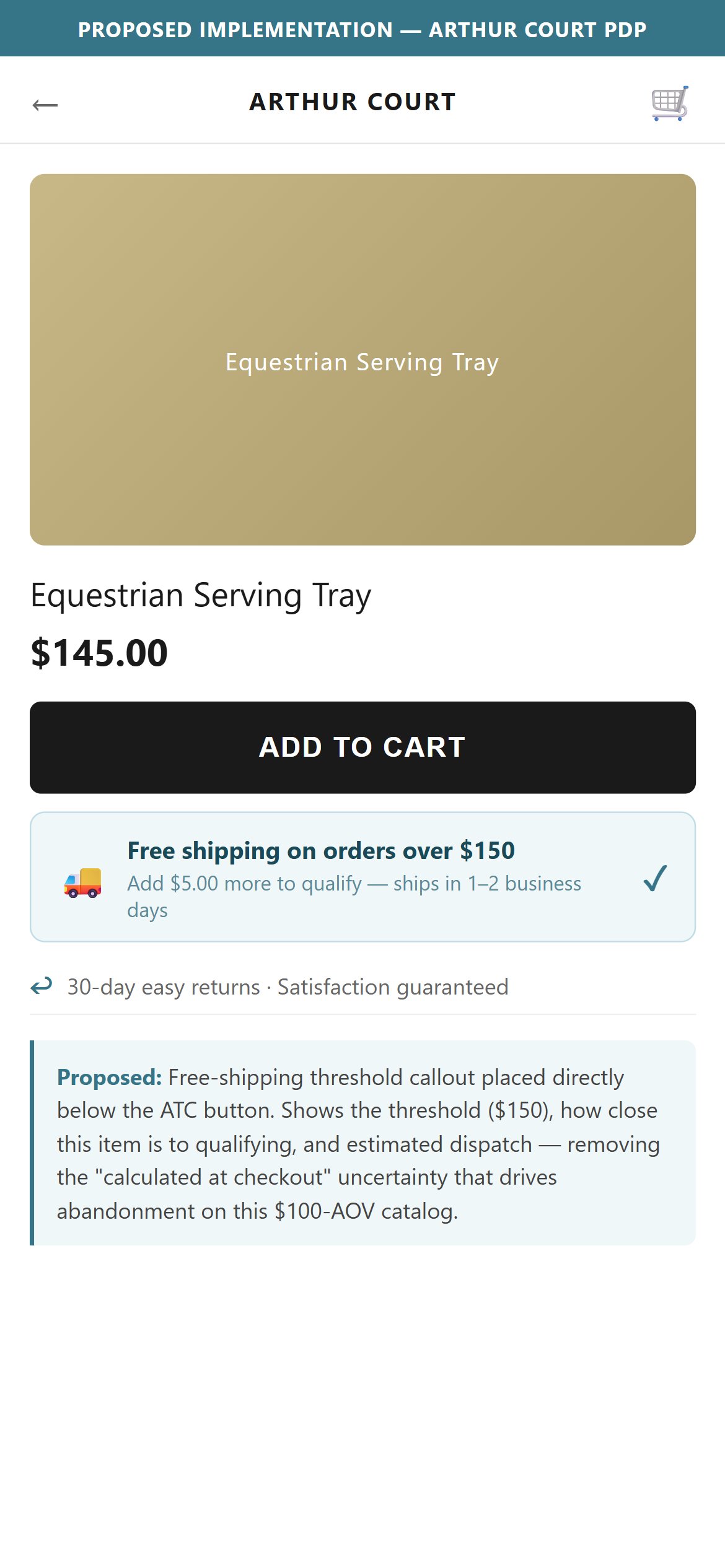
- The store's own add-to-cart path shows no free-shipping or shipping-threshold message near the PDP ATC; shipping is only addressed as 'calculated at checkout' in the cart.
- A 'Buy with Prime' block does show 'FREE Delivery & Returns', but that applies only to Amazon Prime members using the Prime button — shoppers using the standard Add to Cart / Shop Pay path get no shipping reassurance or basket-building nudge.
- Shipping cost is a top abandonment driver; withholding the store's own shipping terms until checkout on a ~$100-AOV catalog removes a clear incentive to build the basket.
- A shipping-threshold callout near the ATC ('Free shipping over $X') is a low-cost nudge that lifts average order value for non-Prime shoppers.
- State the store's own shipping policy near the ATC for the standard checkout path — if a free-shipping threshold exists, show 'Free shipping on orders over $X'; if shipping is always paid, show the flat rate so there are no surprises.
- Reinforce the same threshold with a progress message in the cart (see cart findings).
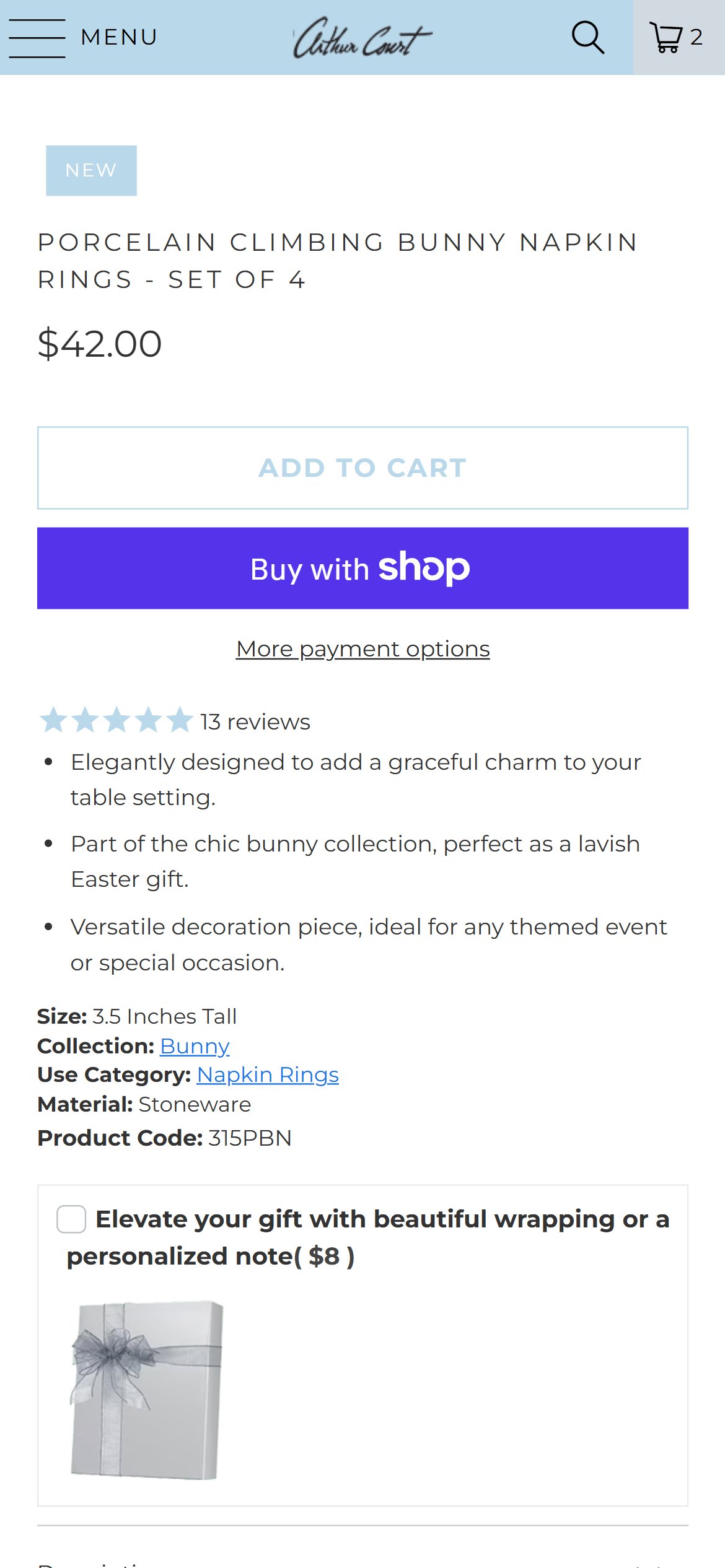
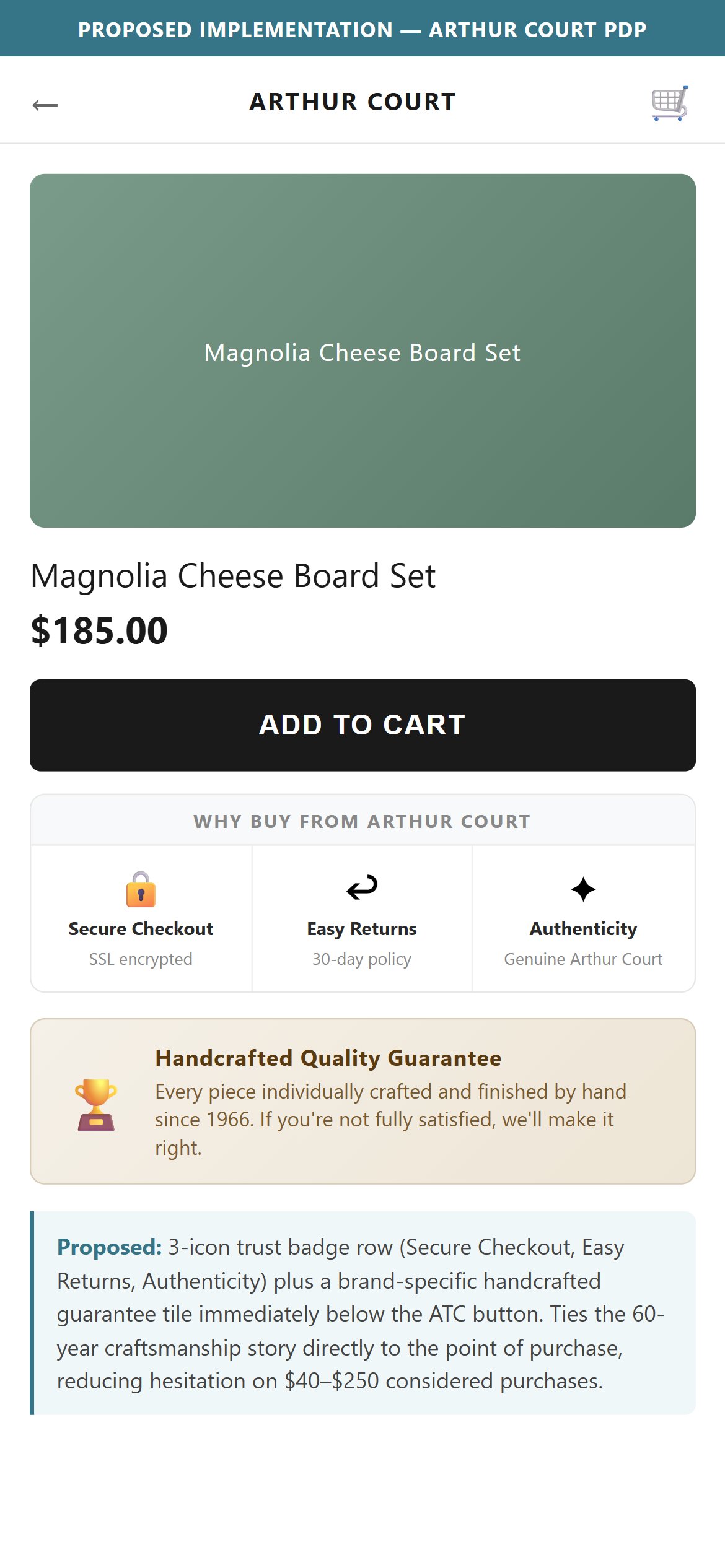
- Beyond the 'Buy with Prime' 'FREE Delivery & Returns' line (Prime-only), the standard add-to-cart zone carries no brand trust, certification, or guarantee badges — no handcrafted/satisfaction guarantee, secure-checkout, or authenticity cue near the Add to Cart button.
- The only other badge-type elements on the page are the Stamped review badge and product 'NEW' stickers; no craftsmanship-guarantee or secure-checkout language sits in the buy zone.
- On $40–$250 considered-purchase serveware bought as gifts, a small brand-guarantee or secure-checkout cue at the decision point reduces hesitation at add-to-cart for shoppers on the standard path.
- A trust/guarantee badge row in the ATC zone is a standard reassurance pattern on premium home & living PDPs.
- Add a compact trust/guarantee badge row immediately under the Add to Cart button (e.g. 'Handcrafted quality guarantee', 'Secure checkout', 'Easy returns').
- Tie at least one badge to the brand's 60-year craftsmanship story to reinforce the premium positioning at the point of purchase.
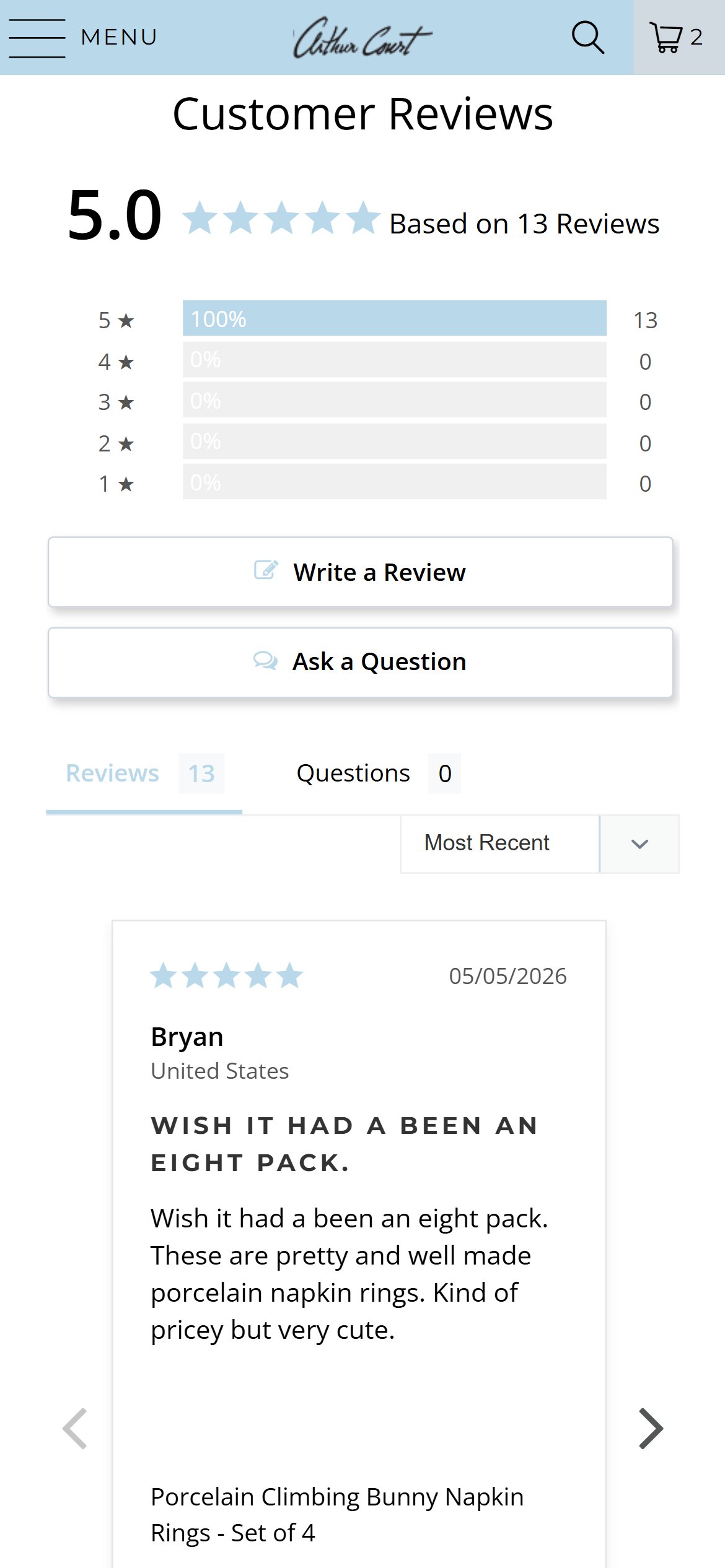
- Stamped.io is installed and the reviews section renders a full star summary ('5.0, Based on 13 Reviews'), a rating distribution, and individual text reviews — so review infrastructure is present, not missing.
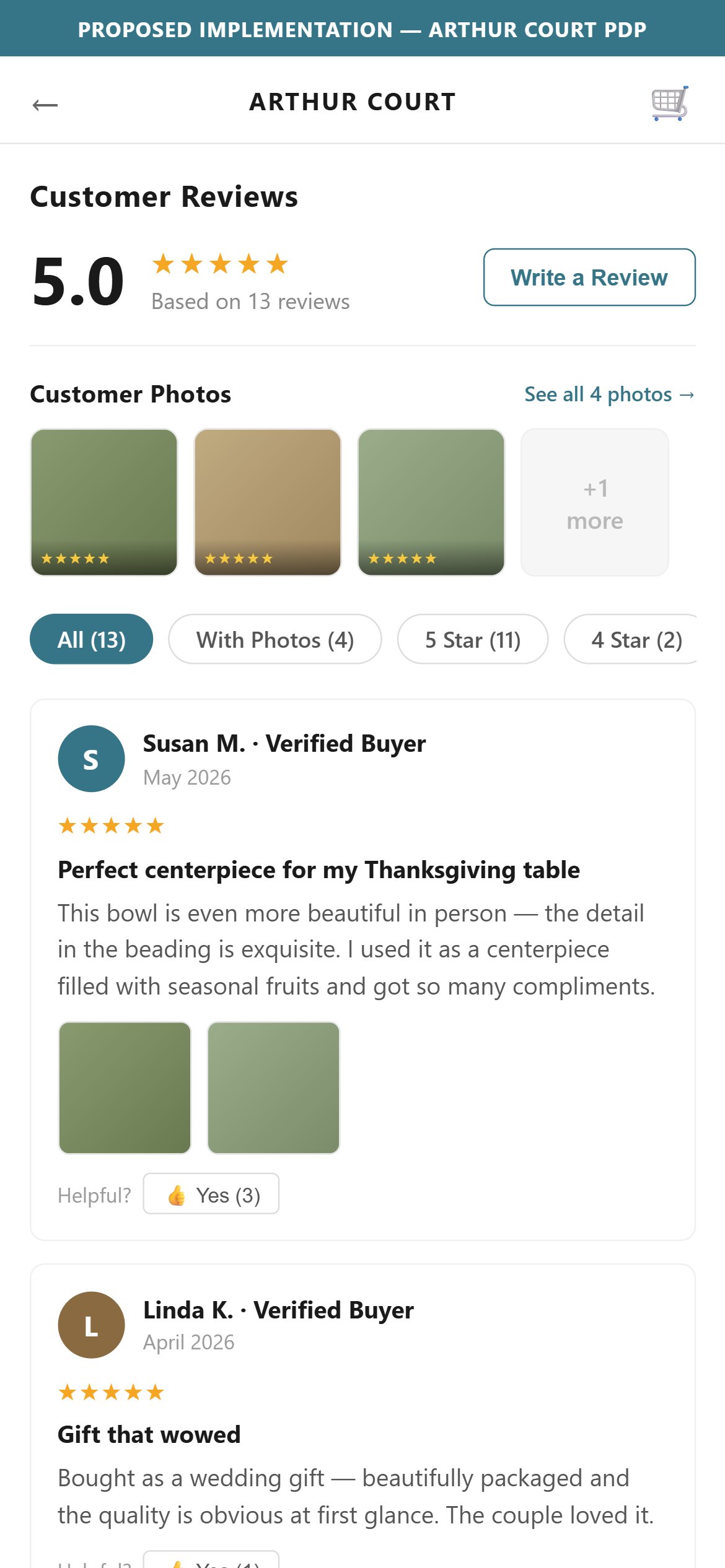
- However the section is text-only: the Stamped 'Customer Photos' container is empty/hidden, no review carries a photo or video thumbnail, and there is no 'with photos' filter — i.e. no user-generated visual content.
- For decorative serveware bought partly on look, customer photos of pieces styled on a real table are among the most persuasive proof points, and their absence weakens the social-proof payoff.
- Photo/video UGC in reviews is a growing standard on premium home & living PDPs.
- Enable and actively solicit photo/video reviews in Stamped (post-purchase email prompts, incentives) so the reviews section surfaces a customer-photo gallery.
- Once UGC exists, add a customer-photo strip near the top of the reviews widget and a 'with photos' filter to make visual proof easy to find.
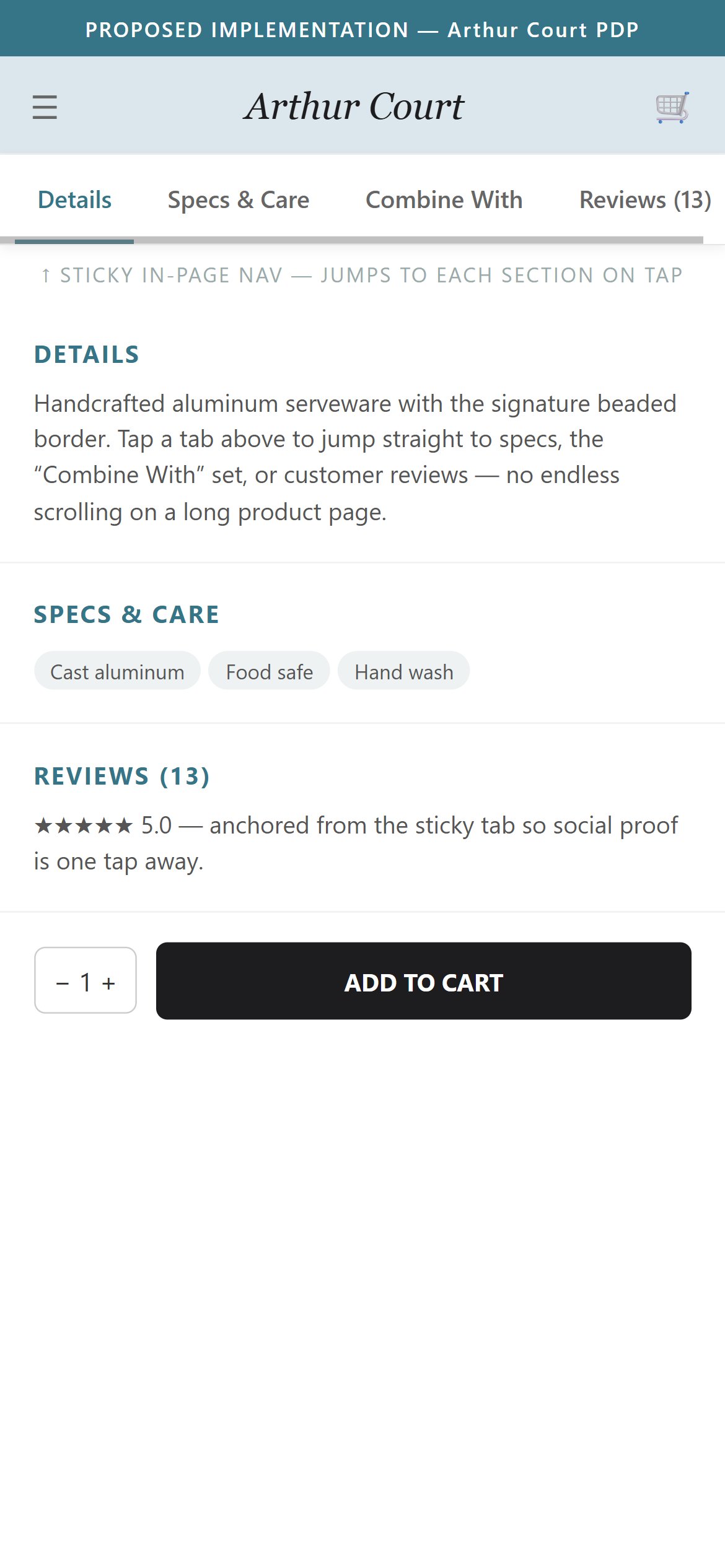
- Arthur Court PDPs are long — image gallery, bullet details, specs, a large 'Combine With' cross-sell (roughly 18 products), then the full reviews section — but there is no sticky in-page section navigation to move between them.
- On mobile the shopper must scroll continuously through the whole page to reach specs, the cross-sell set, or the customer reviews, then scroll all the way back up to buy.
- A sticky section-nav tab bar (Details / Specs & Care / Combine With / Reviews) anchored to each block is a common long-PDP usability pattern and keeps key content one tap away.
- No sticky section-navigation element exists on the live PDP (confirmed against the live page).
- Add a sticky horizontal section-nav bar below the header that appears on scroll, with tabs (Details, Specs & Care, Combine With, Reviews) that jump to each section.
- Anchor the Reviews tab to the Stamped widget so social proof is reachable in one tap from anywhere on the page.
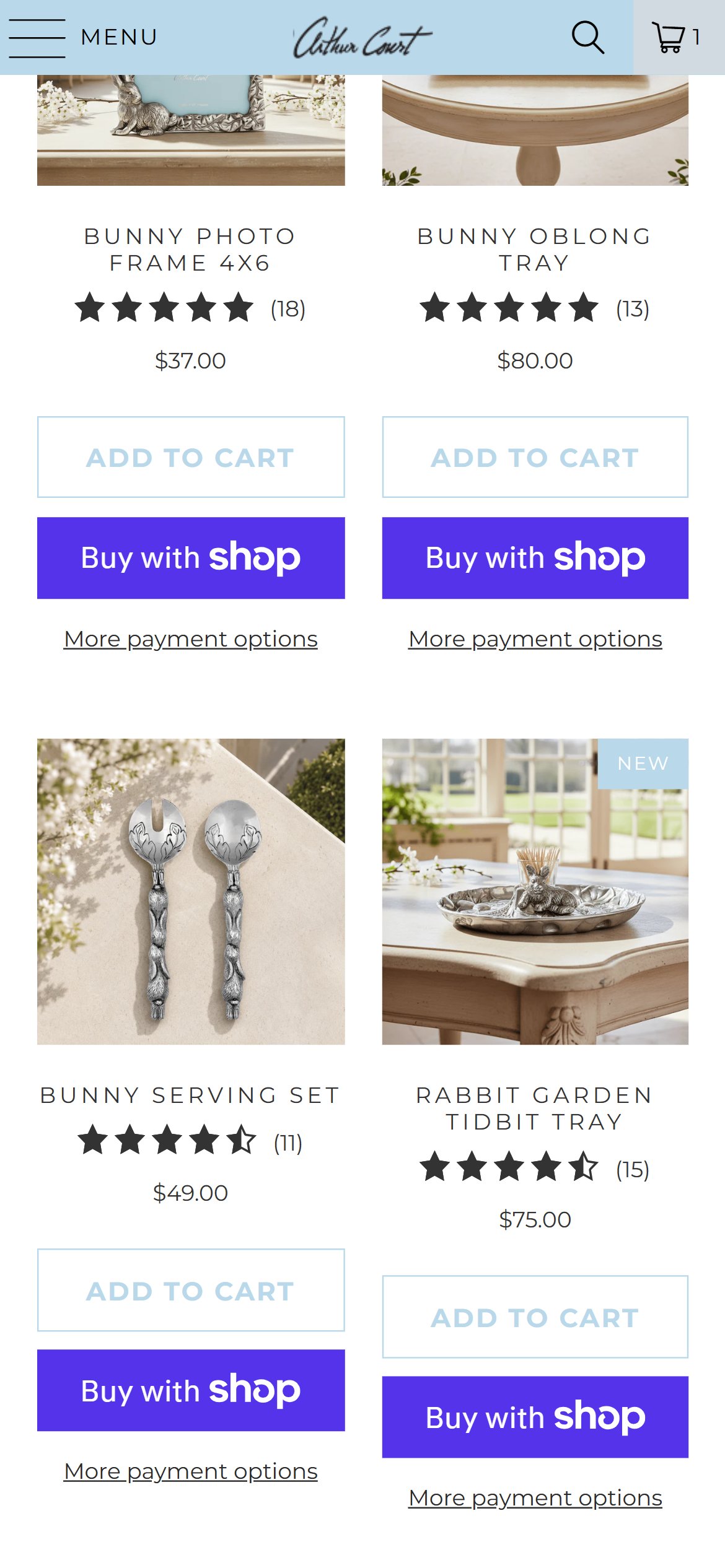
- The PDP has multiple content folds below the product description, significantly increasing scroll length before users reach the reviews section.
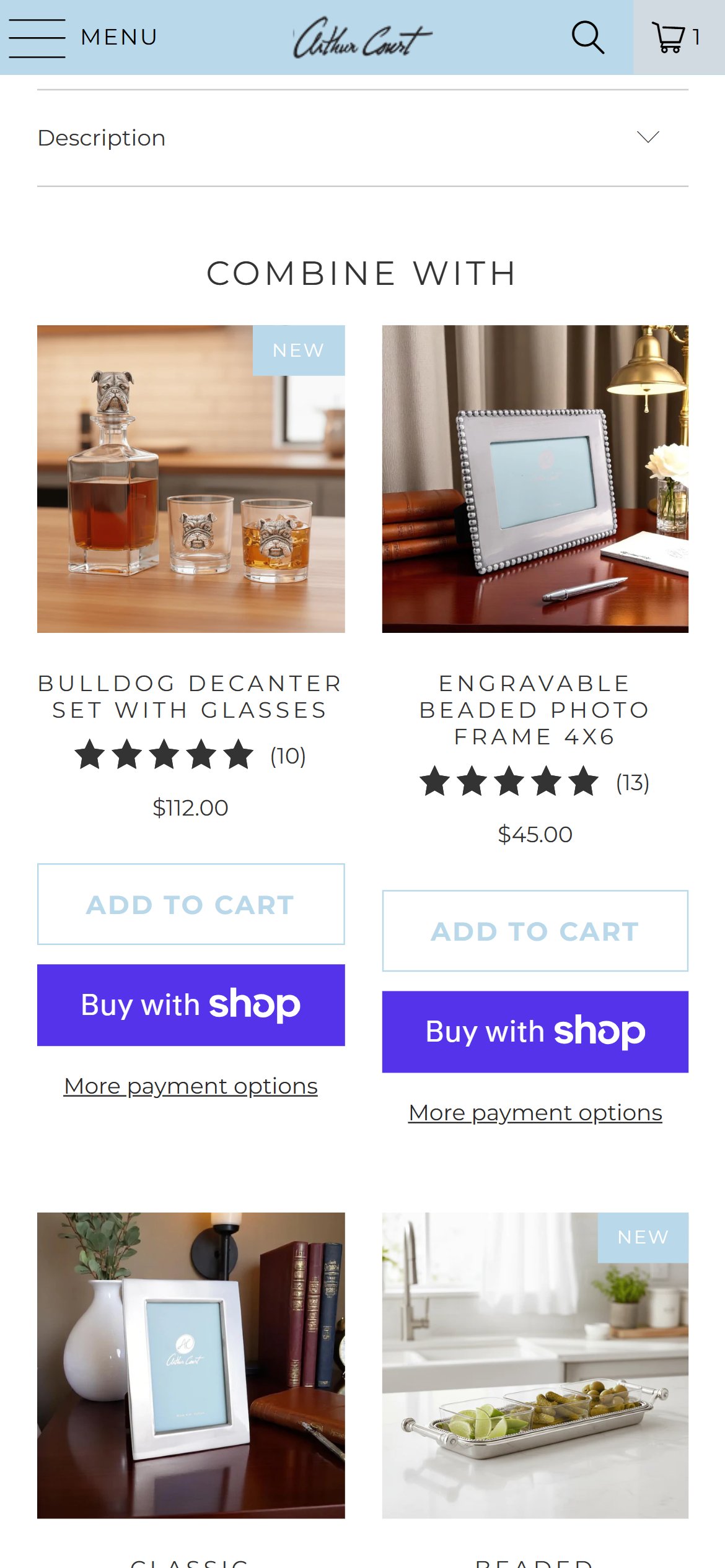
- The 'Combine With' recommendation block is one long, repetitive fold — every recommended product renders as a full card (image, rating, price, Add to Cart, Buy with Shop, More payment options), so the section runs on for many screens.
- The recommendations are fragmented and undifferentiated rather than organized into scannable, purpose-led groups, creating a cluttered experience and scroll fatigue.
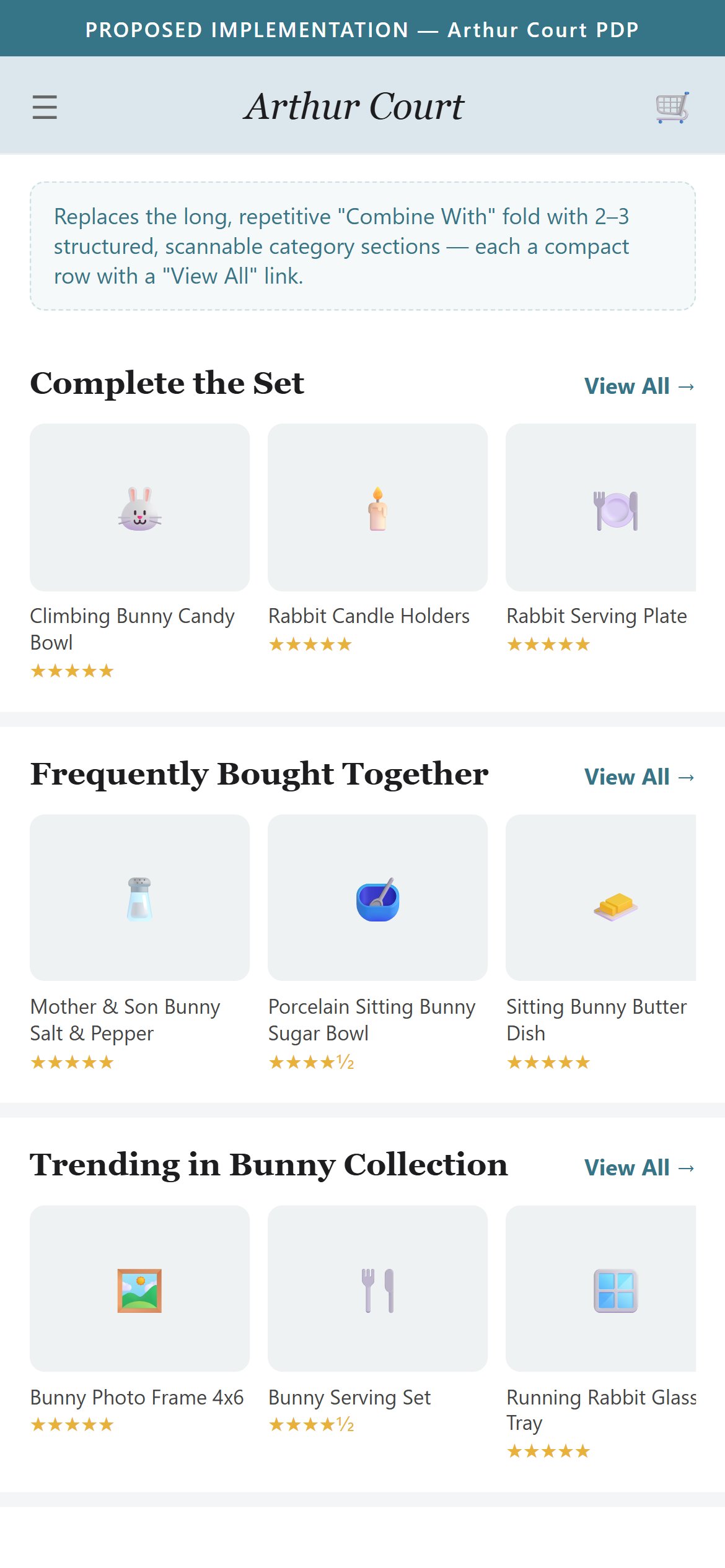
- Competitors optimize PDP layouts with structured, category-based recommendation sections that improve navigation efficiency and shorten the path to reviews and conversion.
- Replace the single long recommendation fold with 2–3 structured category sections (e.g. Related Products, Frequently Bought Together, Trending in Category), each a compact horizontal row.
- Show 5–6 compact product tiles per section with a 'View All' CTA linking to the relevant collection, instead of full add-to-cart cards stacked vertically.
- Keep the layout hierarchically organized so reviews stay reachable with far less scrolling, improving content flow and product discovery.
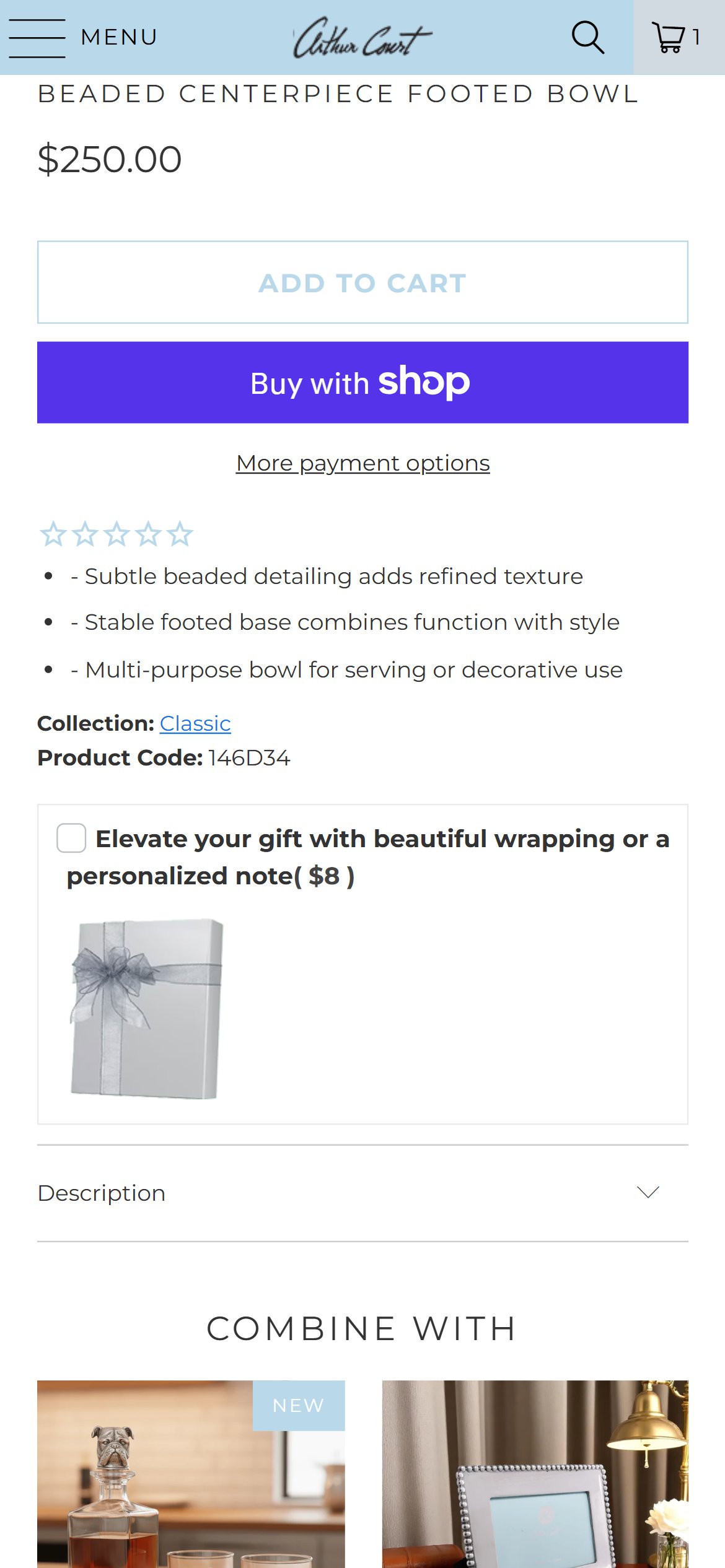
- The standard PDP buy zone (Add to Cart / Buy with Shop) shows no estimated delivery date and no ZIP/deliverability check — a shopper on the normal checkout path cannot tell when an item will arrive without proceeding toward checkout.
- A delivery ETA does appear, but only inside the 'Buy with Prime' block (e.g. 'Get it as soon as …') — that is Amazon Prime-only and tied to the Prime checkout, so it does not help non-Prime shoppers using the store's own Add to Cart flow.
- For gift-driven purchases (the site merchandises Father's Day, Wedding and Hostess gift guides) a clear arrival estimate is decisive around occasion deadlines.
- Competitors surface a real-time delivery/ETA check near the purchase section for all shoppers, improving transparency and reducing hesitation.
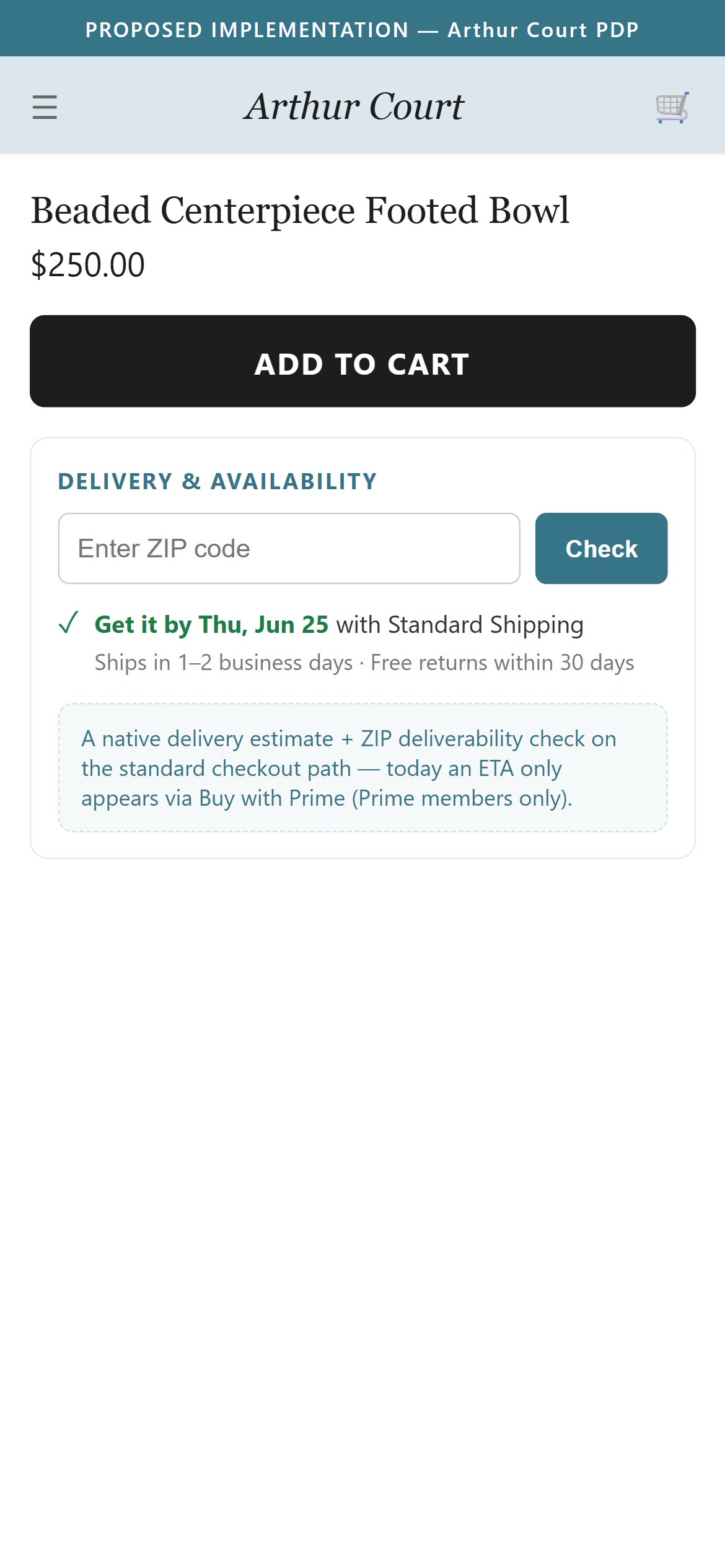
- Add a native estimated delivery date (or date range) in the standard PDP buy zone, driven by the store's fulfillment SLA, visible to all shoppers — not only Prime members.
- Offer an optional ZIP-code deliverability/ETA check near Add to Cart that returns a dynamic arrival estimate based on location.
- Keep it fast, mobile-friendly, and clearly visible at the point of the purchase decision.
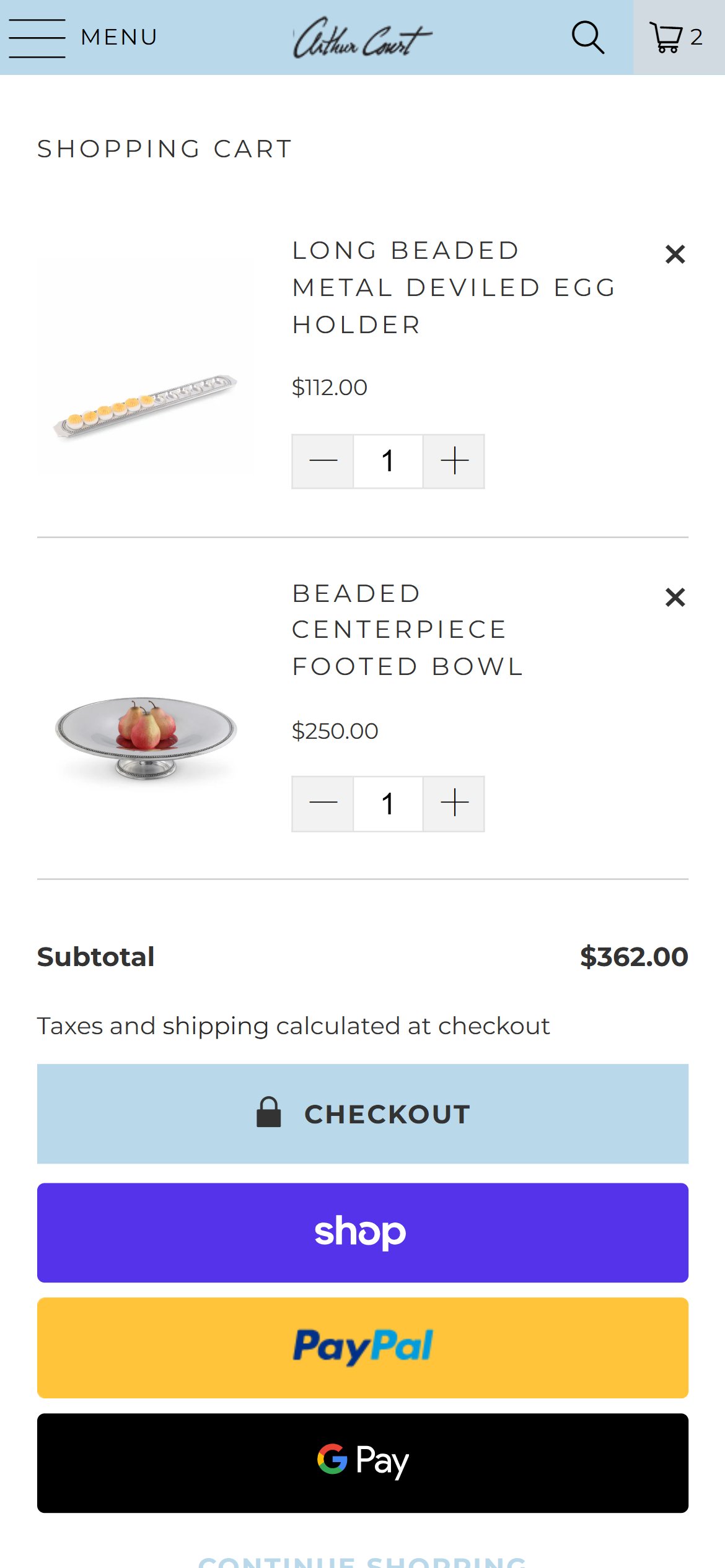
- The /cart page lists only the line items, subtotal, and the checkout / express-pay buttons — there is no 'You may also like', 'Complete the set', or add-on (e.g. gift wrap) recommendation module anywhere in the cart.
- With a populated 2-item, $362 cart the page moves the shopper straight from line items to checkout, missing the highest-intent moment to raise basket size with complementary serveware.
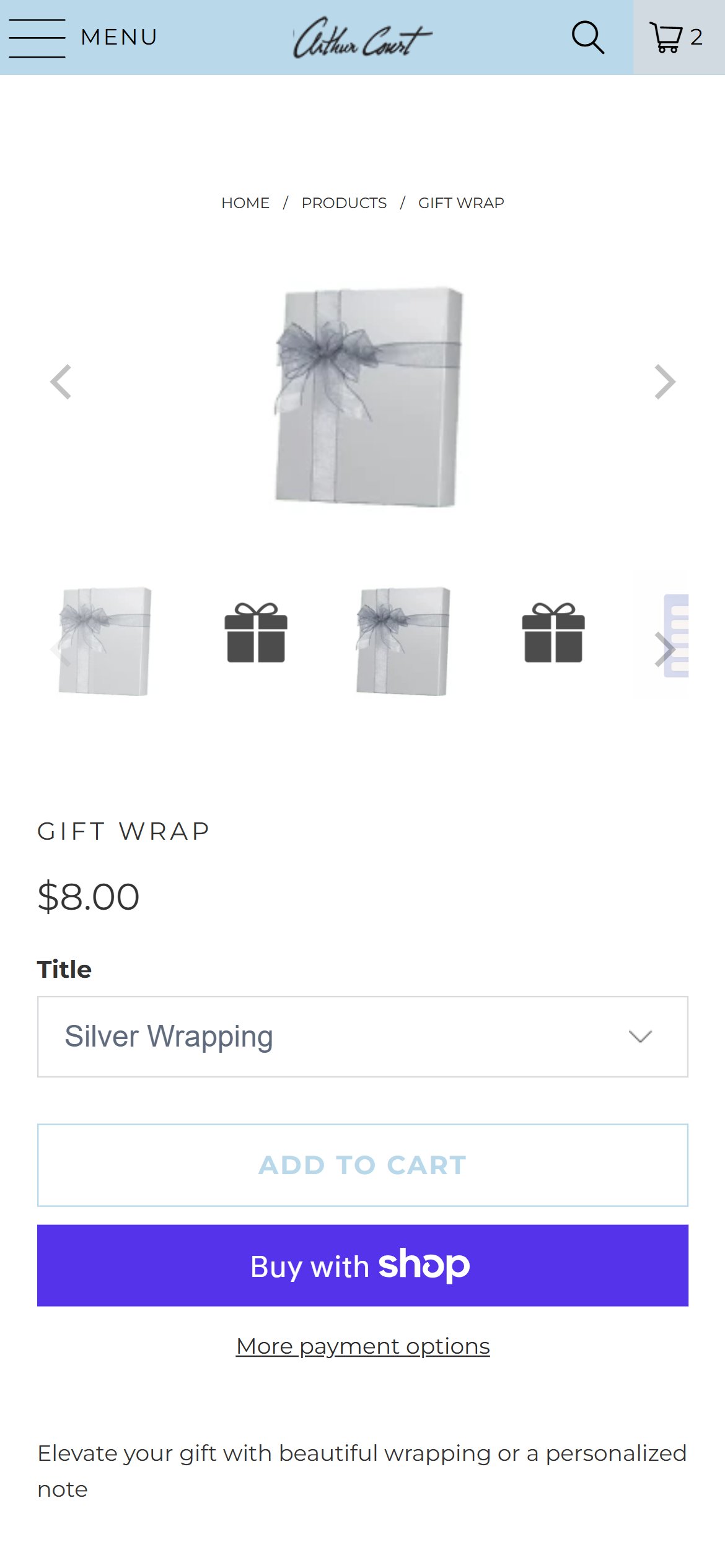
- Arthur Court already merchandises a 'Combine With' cross-sell on the PDP and sells a $8 gift-wrap add-on, yet none of that recommendation logic is surfaced in the cart.
- Cart-stage cross-sell is an increasingly standard AOV lever on premium home & living storefronts.
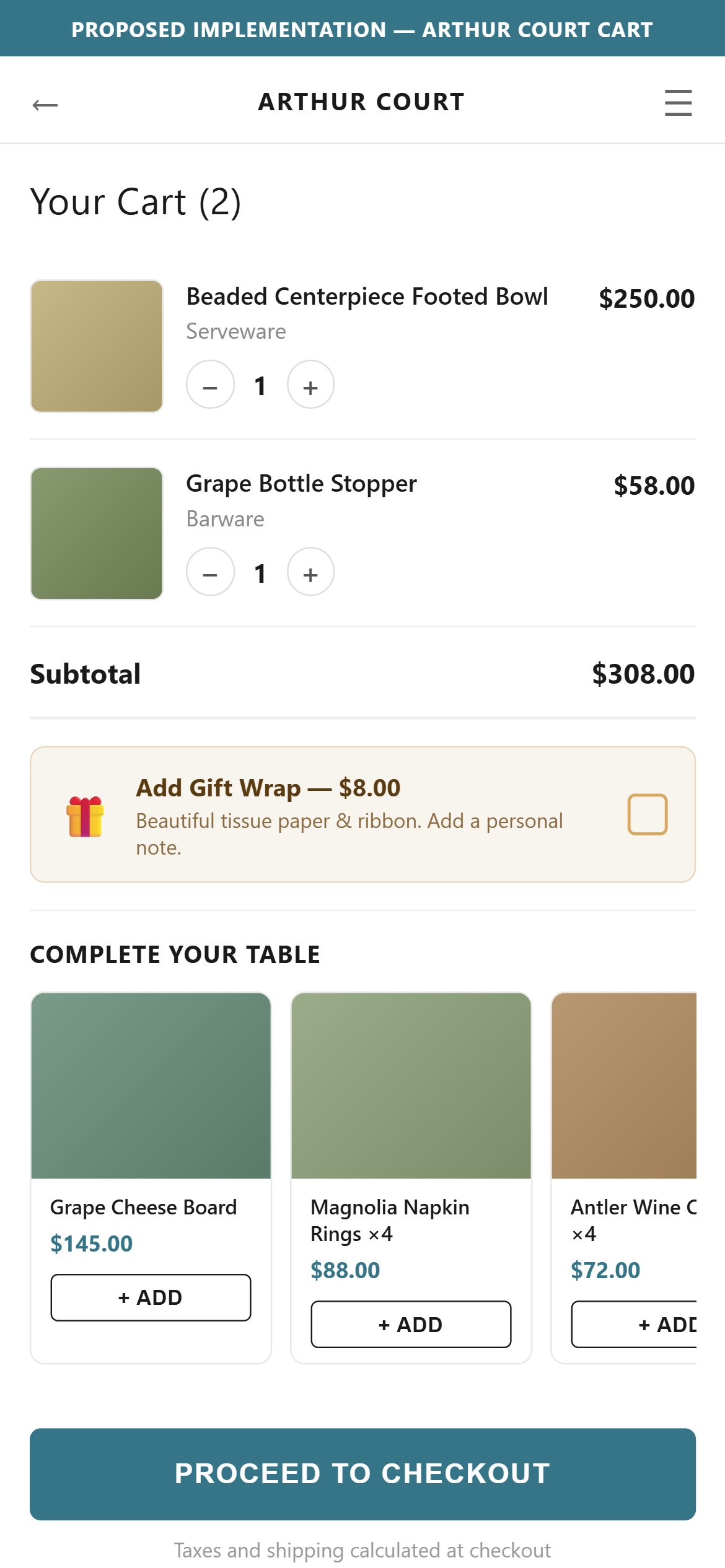
- Add a compact 'Complete your table' / 'You may also like' recommendation row in the cart drawer and on the /cart page, seeded from the same logic as the PDP 'Combine With' module.
- Surface the $8 gift-wrap add-on as a one-tap checkbox in the cart for gift-driven purchases.
- The cart shows the subtotal followed only by 'Taxes and shipping calculated at checkout' — there is no free-shipping threshold message and no progress bar indicating how much more to spend to qualify.
- Shipping cost is a leading abandonment driver, and deferring all shipping information to checkout removes any incentive to build the basket while the shopper is still in the cart.
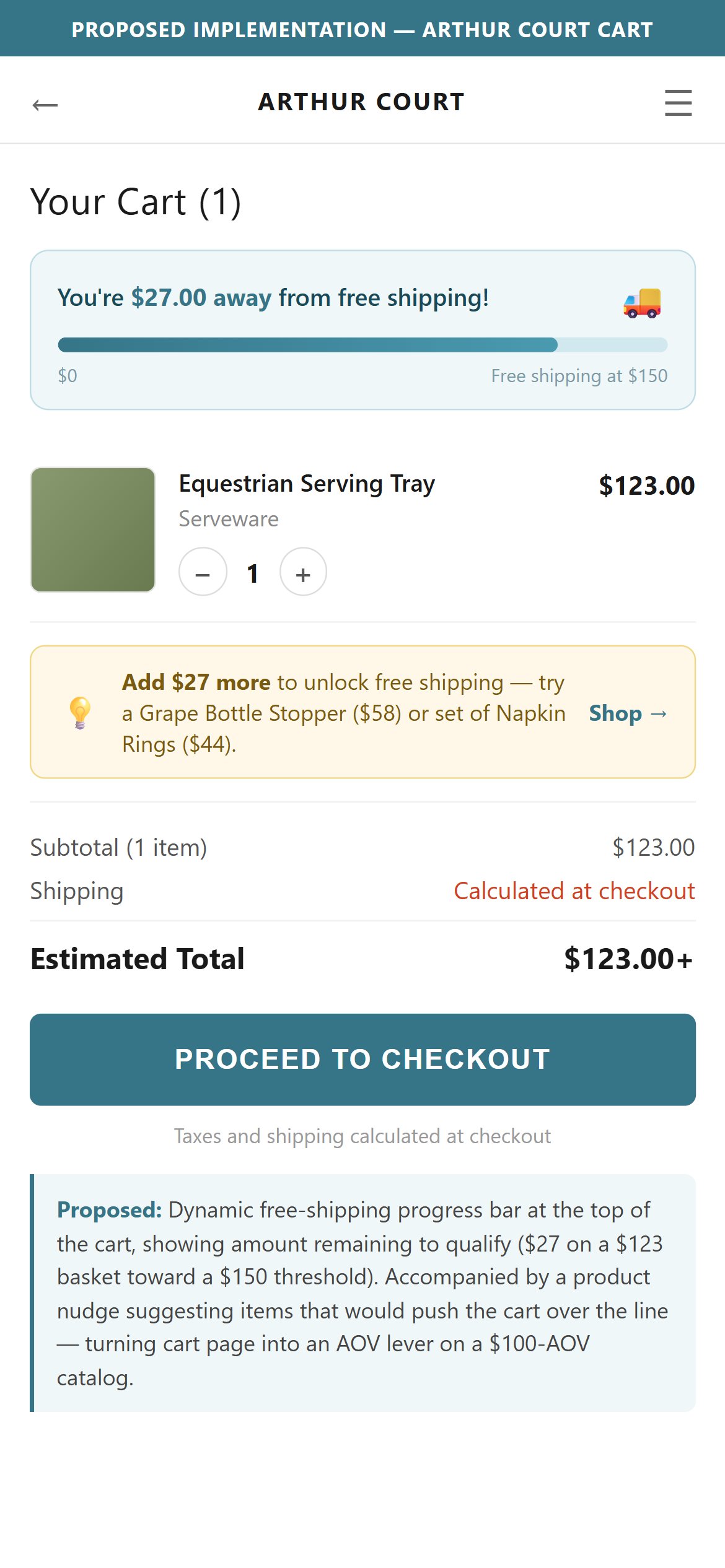
- A threshold progress bar ('You're $X away from free shipping') turns the cart into an AOV lever — especially relevant on a $100-AOV catalog with $30–$250 price points.
- No free-shipping or threshold language appears anywhere in the cart DOM.
- If a free-shipping threshold exists, add a dynamic progress bar in the cart ('You're $X away from free shipping') that updates as items are added.
- Reinforce the same threshold on the PDP add-to-cart zone so the incentive is set before the shopper reaches the cart.
App Ecosystem
What's installed vs what's missing from best-in-class Home & Living stores
Present (8)
Missing (4)
App Stack Assessment
Arthur Court has a mature app ecosystem covering email/SMS (Klaviyo), reviews (Stamped), loyalty (Smile.io), lead capture (Justuno), post-purchase upsell (ReConvert), affiliate (ShareASale), and search (Searchanise), plus Amazon Buy with Prime. The biggest opportunity is activation rather than acquisition: the Searchanise search app is installed but predictive search and faceted filters are not enabled, and there is no cart-stage AOV tooling (free-shipping bar, cross-sell) or BNPL. Buy with Prime is present but worth monitoring so it does not cannibalize the native add-to-cart path.
Confidential — Prepared for Arthur Court by Growisto | June 2026